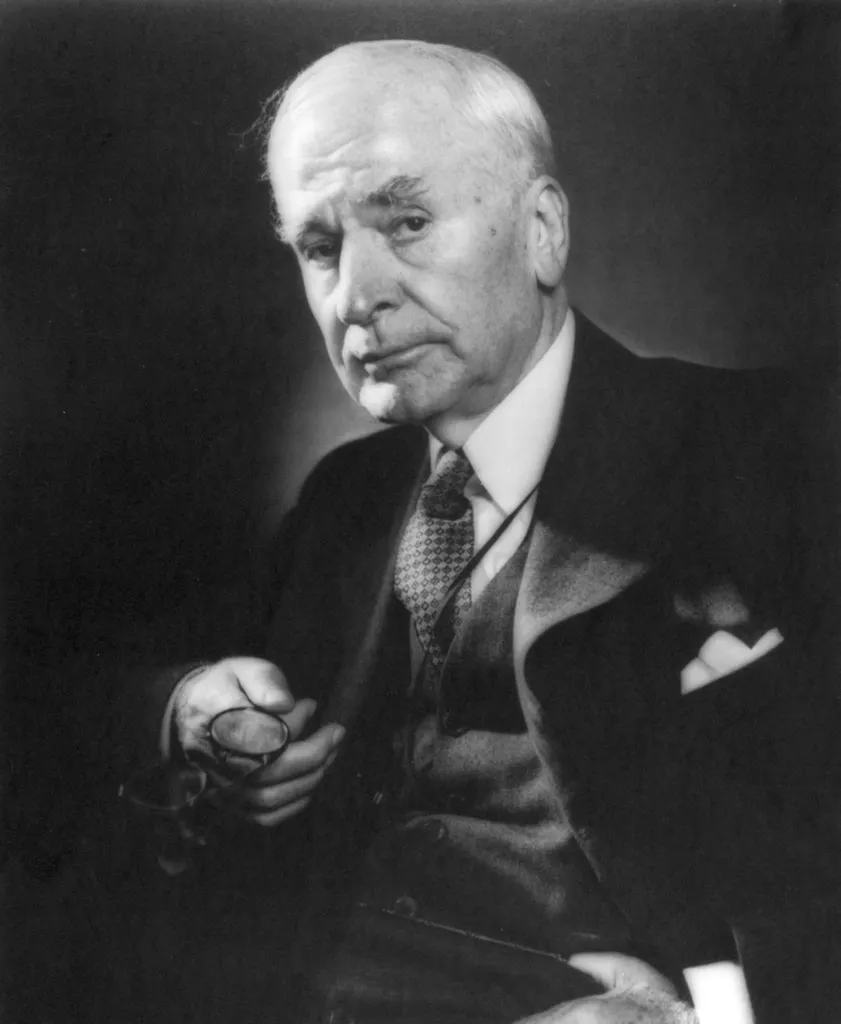
The boy was born in 1871 in a one-room log cabin on a hillside in what is now Pickett County, Tennessee, the third of five sons of a father who had been blinded in one eye by Confederate guerrillas during the Civil War and a mother who had taught him to read by the light of a pine-knot fire. Seventy-four years later, that boy stood in the East Room of the White House while President Truman read the citation announcing that he had won the Nobel Peace Prize for laying the foundations of the United Nations. His name was Cordell Hull, and he was a Tennessee Freemason.
The Mountain Schoolboy
Pickett County in 1871 was as remote a corner of the Republic as could be found east of the Mississippi. There were no railroads. The nearest college was a hard week's journey by mule and wagon. Cordell Hull's father, William Paschal Hull, was a small farmer and timberman; his mother, Elizabeth Riley Hull, was a woman of fierce intelligence and stricter Methodism.
The boy was bright. He attended a series of small academies and at last took a law degree at Cumberland University at Lebanon, Tennessee, in 1891, at the age of nineteen. He was admitted to the bar that year and elected to the Tennessee state legislature at twenty-one. He served as a captain of the Fourth Tennessee Volunteer Infantry in Cuba during the Spanish–American War of 1898. He was elected a circuit court judge in the Fourth Tennessee Judicial District in 1903, the source of the courteous nickname, Judge Hull, that would follow him to the end of his life.
Raised in the Craft
The Hull family was rooted in the Freemasonry of the Tennessee hill country. Cordell's father, William Paschal Hull, served as Master of Celina Lodge in Clay County in 1894 and 1895. Cordell himself grew up amid that fraternal tradition and is remembered in Tennessee Masonic circles as a son of the Craft, carrying its quieter cultivation of dignity and patient deliberation into rooms where few Tennesseans had ever before set foot.
Twenty-Two Years on Capitol Hill
Hull was elected to the United States House of Representatives in 1906 and served eleven terms, twenty-two years, almost without interruption. He authored the federal income-tax statute of 1913, the first since the Civil War, and the federal estate-tax statute of 1916. By the late 1920s he was the most respected Democrat on the Ways and Means Committee and a quiet, strenuous advocate of free trade against the protectionist majorities of his era. He served briefly in the U.S. Senate before being called to higher service.
Secretary of State
President-elect Franklin Roosevelt summoned Cordell Hull to Hyde Park in February 1933 and asked him to take the State Department. Hull accepted. He would serve as Secretary of State for the next eleven years and nine months, the longest tenure in the office's history before or since.
His record is too long to list here in full. He negotiated the Reciprocal Trade Agreements Act of 1934, which restored the principle of negotiated tariff reductions to American policy. He was the architect of the Good Neighbor Policy in Latin America. In 1941 he conducted the long, painful, and ultimately fruitless final negotiations with Japan in the days before Pearl Harbor. Through the war he was the chief American advocate of the post-war international organization that would, in 1945, take the name United Nations.
"There will no longer be need for spheres of influence, for alliances, for balance of power, or any other of the special arrangements through which, in the unhappy past, the nations strove to safeguard their security or to promote their interests."
Cordell Hull, address to Congress, November 18, 1943
His health failed in 1944. He resigned the Department in November of that year, the longest-serving Secretary of State in American history. President Roosevelt, in his last public letter to Hull, called him "the Father of the United Nations."
The Nobel
The Nobel Peace Prize for 1945 was awarded to Cordell Hull. The committee cited his work in establishing the United Nations and his decades-long advocacy of trade as a means to peace.
Cordell Hull died in Bethesda, Maryland, on July 23, 1955, at the age of eighty-three. He is buried at Washington National Cathedral. His birthplace cabin in Pickett County is preserved today as a Tennessee state historical site, and a small museum on the grounds tells the story of the most accomplished diplomat the Tennessee hills have ever produced, and one of the most distinguished Masons the Volunteer State has given to the Republic.