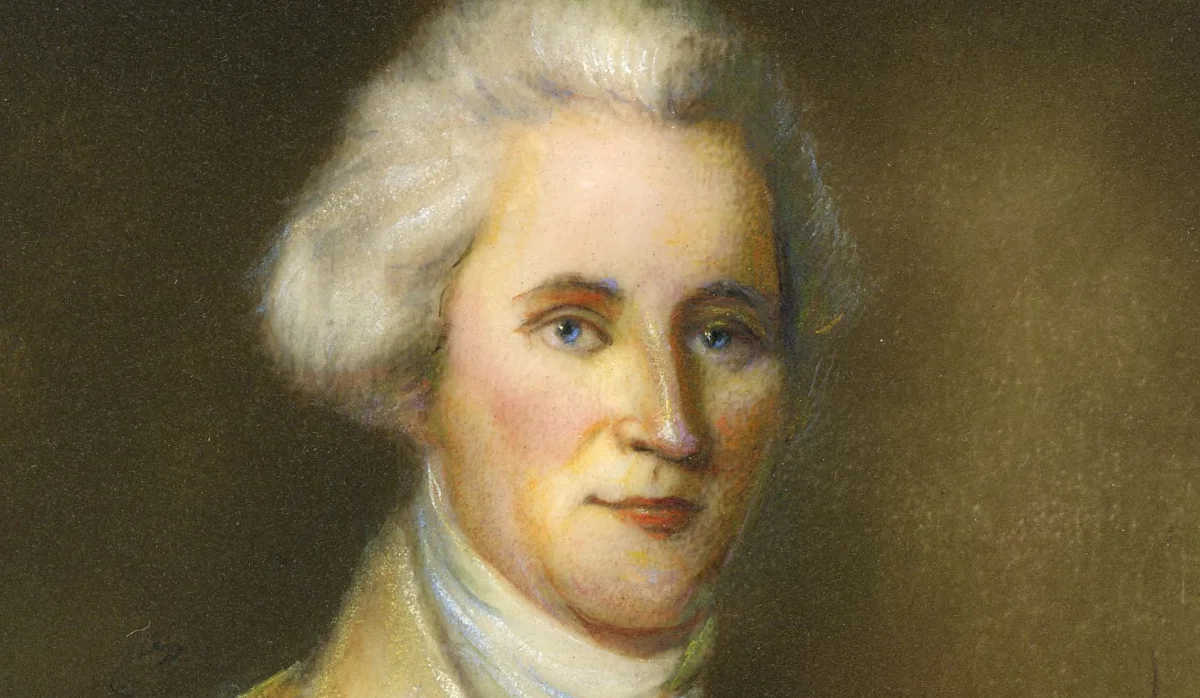
Before there was a State of Tennessee, there was the State of Franklin, a short-lived, unrecognized commonwealth declared in 1784 by frontier settlers who had grown tired of waiting for North Carolina to govern them across the Appalachian wall. The man elected its first and only governor was an Indian fighter, a militia colonel, and a Freemason: John Sevier of the Nolichucky River. Twelve years later, when the United States Congress at last admitted Tennessee as the sixteenth state, the same John Sevier raised his hand and took the oath as its first lawful governor.
Sevier was born in 1745 in the Shenandoah Valley of Virginia, the son of a French Huguenot immigrant. By the early 1770s he had pushed west of the mountains into what is now upper East Tennessee, settling on the Watauga River near present-day Elizabethton. There, with men like James Robertson and Isaac Shelby, he helped frame the Watauga Articles of Association, sometimes called the first written constitution in America west of the mountains.
The Overmountain Men
His national fame was made on a single autumn day in 1780. When British Major Patrick Ferguson threatened to march over the mountains and "lay waste the country with fire and sword," Sevier and Shelby raised the famed Overmountain Men, frontier riflemen in hunting shirts, and crossed the Appalachians eastward. On October 7, 1780, at Kings Mountain, South Carolina, they killed Ferguson and destroyed his command in an hour of close fighting. Thomas Jefferson would later call it "the turn of the tide of success." Without it, the Revolution in the South may well have collapsed.
Sevier returned a hero. Over the following decades he served in the North Carolina legislature, the State of Franklin, the U.S. Congress, and at last six terms as Governor of Tennessee, three under the constitution of 1796 and three more (after a constitutional gap) from 1803 to 1809. He was beloved by his frontier constituents, who knew him simply as "Nolichucky Jack."
A Mason on the Frontier
Sevier was raised a Master Mason in the eastern lodges before the war and was an active member of the Craft on the frontier. He served as the first Worshipful Master of Tennessee Lodge No. 2 in Knoxville, chartered November 30, 1800 by the Grand Lodge of North Carolina, and is recorded in attendance at meetings held in the rough-hewn upper rooms of frontier taverns and courthouses. Many of his closest associates in the Wataugan and Franklinite movements, James Robertson, William Cocke, and others, were brethren of the same lodges.
The records of those early years are imperfect; many were lost to fire, war, and the long migrations of frontier life. But contemporary accounts speak of Sevier as a brother committed to the Craft's principles of equality and good fellowship, a striking thing on a frontier where rank, religion, and origin so often divided men who depended upon one another for survival.
The First Governor
On March 30, 1796, six weeks before Tennessee was formally admitted to the Union, Sevier took the oath of office as the new state's first governor in a ceremony at Knoxville. He served three consecutive terms, then (after the constitution required him to step down) returned to the legislature, was returned to the governorship for three more, and was finally elected to the United States House of Representatives in 1811.
"He had a manner perfectly winning… and his fame as a soldier and patriot was a part of the air men breathed."
Theodore Roosevelt, The Winning of the West
Sevier died on a survey expedition along the Tallapoosa River in 1815. His body was brought home in 1889 and reinterred on the courthouse lawn in Knoxville, where his grave is marked to this day. Sevier County, Tennessee, home to the Great Smoky Mountains National Park, bears his name. So too do innumerable schools, streets, and the title of an honored ancestor for thousands of Tennesseans whose family lines can be traced to his Wataugan settlers.
For Tennessee Freemasons, his memory carries a particular weight. He stands at the head of the line, the first governor of the state, and one of the very first brethren to wear the apron on Tennessee soil.